What matters most
- Document structural, impact, fatigue, creep, temperature, chemical, and assembly loads.
- Select a grade against the application rather than using a generic metal-to-plastic substitution.
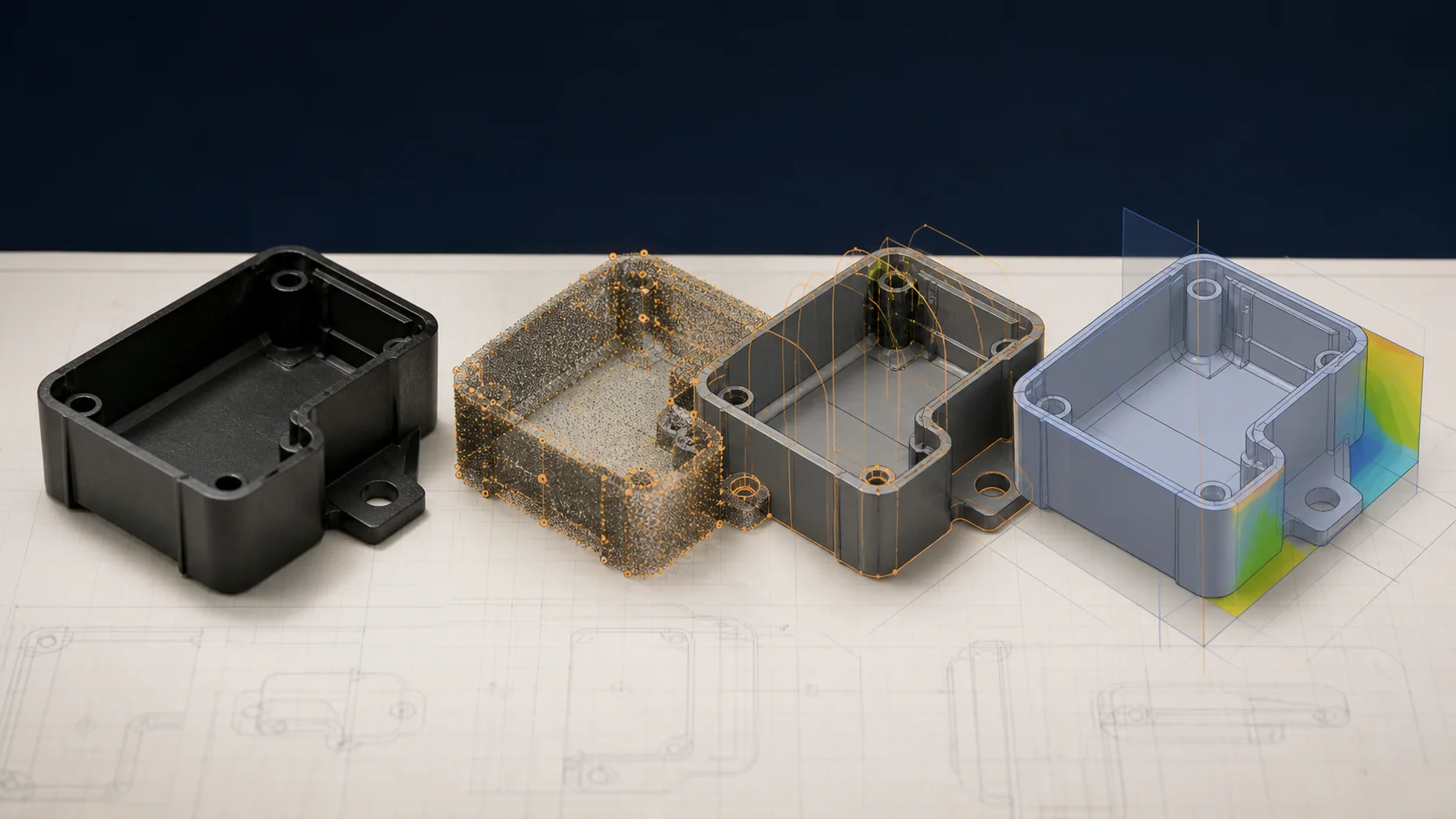
- Use molded ribs, radii, coring, draft, and local reinforcement to carry loads efficiently.
Redesign the function, not only the material
Evaluate the technical choice together with part requirements, tooling consequences, production controls, and the evidence required for approval.
Load case
Document structural, impact, fatigue, creep, temperature, chemical, and assembly loads.
Material
Select a grade against the application rather than using a generic metal-to-plastic substitution.
Geometry
Use molded ribs, radii, coring, draft, and local reinforcement to carry loads efficiently.
Validation
Compare production-representative parts with the original functional and environmental requirements.
Technical guide
The sections below retain the detailed design, tooling, process, and quality context needed to evaluate this topic beyond the summary.
Key Takeaways
- 1 The automotive plastic injection molding market is projected to grow from $20.1 billion (2024) to $34.6 billion by 2034 — fueled by EV lightweighting mandates and tightening fuel economy standards worldwide.
- 2 A well-executed M2P conversion delivers 30–50% weight reduction and 25–50% lifecycle cost savings by eliminating secondary machining, plating, and multi-piece metal assembly operations.
- 3 Resin selection drives performance: aluminum structural parts convert to glass-fiber-reinforced nylon (PA66-GF30); zinc die-cast to POM (acetal); brass hardware to glass-filled PP. Matching the resin to the load case is the most consequential engineering decision in any M2P program.
- 4 IATF 16949 certification is the production standard automotive OEMs require from any mold supplier executing an M2P program — mandating PPAP documentation, FMEA, SPC data, and Cpk > 1.67 for critical features.
Why Metal-to-Plastic Conversion Is Accelerating
Every kilogram removed from a vehicle’s mass improves fuel economy by approximately 0.5%, and the calculus has only sharpened with the global shift to EVs — where battery range is a direct function of total vehicle weight. The result is a structural shift in OEM sourcing: engineers who once specified die-cast aluminum or stamped-steel brackets are now re-evaluating whether those components could be injection-molded in glass-fiber-reinforced thermoplastics instead.
The market data reflects this shift. The global automotive plastic injection molding segment is forecast to grow at a CAGR of 5.6% through 2034, reaching $34.6 billion — driven primarily by structural component conversion, under-hood thermal management parts, and EV battery housings. According to Kaysun Corporation’s M2P cost analysis, a single injection-molded piece of nylon can replace several steel components, consolidating parts and reducing assembly labor simultaneously. A 2025 industry survey by Ulite found that 78% of manufacturers are actively exploring metal-to-plastic conversion programs.
Metal-to-plastic conversion is not a one-size-fits-all decision, however. It requires a structured engineering workflow: functional analysis of the metal part’s load environment, resin selection matched to those loads, complete DFM re-analysis of the geometry, and finally, qualification documentation (PPAP/APQP) meeting the OEM’s supplier approval requirements. The sections below cover each phase with the engineering specifics that determine program success.
Selecting the Right Resin: The Most Consequential M2P Decision
Substituting metal with plastic without engineering analysis of the load environment is the primary cause of M2P program failures. The table below maps the four most common metal-to-plastic conversion paths to their recommended engineering resins, based on material performance data compiled by Zetar Mold and Ulite Mech M2P case studies:
| Metal Being Replaced | Recommended Resin | Density (vs Metal) | Tensile Strength | Key Advantage |
|---|---|---|---|---|
| Die-cast aluminum (2.76 g/cm³) | PA66 GF30 (Nylon 66, 30% glass fiber) | 1.38 g/cm³ — 50% lighter | 185 MPa | Superior specific strength, corrosion immunity, zero secondary finishing |
| Zinc die-cast (6.6 g/cm³) | POM (Acetal / Delrin) | 1.41 g/cm³ — 79% lighter | 70 MPa | Dimensional stability, low friction, eliminates galvanic corrosion |
| Steel (7.8 g/cm³) | PEEK (30% carbon fiber) | 1.41 g/cm³ — 82% lighter | 230 MPa; HDT 260°C | Extreme heat and chemical resistance, EMI shielding option |
| Brass hardware (8.5 g/cm³) | PP GF40 (Polypropylene, 40% glass fiber) | 1.24 g/cm³ — 85% lighter | 120 MPa | Corrosion-proof, lowest cost per kg of all engineering resins |
One critical nuance: adding 30% glass fiber to nylon roughly doubles its tensile strength versus unfilled nylon. However, fiber orientation introduced by injection molding creates anisotropy — parts are stronger in the flow direction than perpendicular to it. Gate placement and flow simulation are therefore essential at the design stage, not optional refinements, particularly for structural brackets and load-bearing housings.
DFM Rules That Differ Between Metal and Plastic Geometry
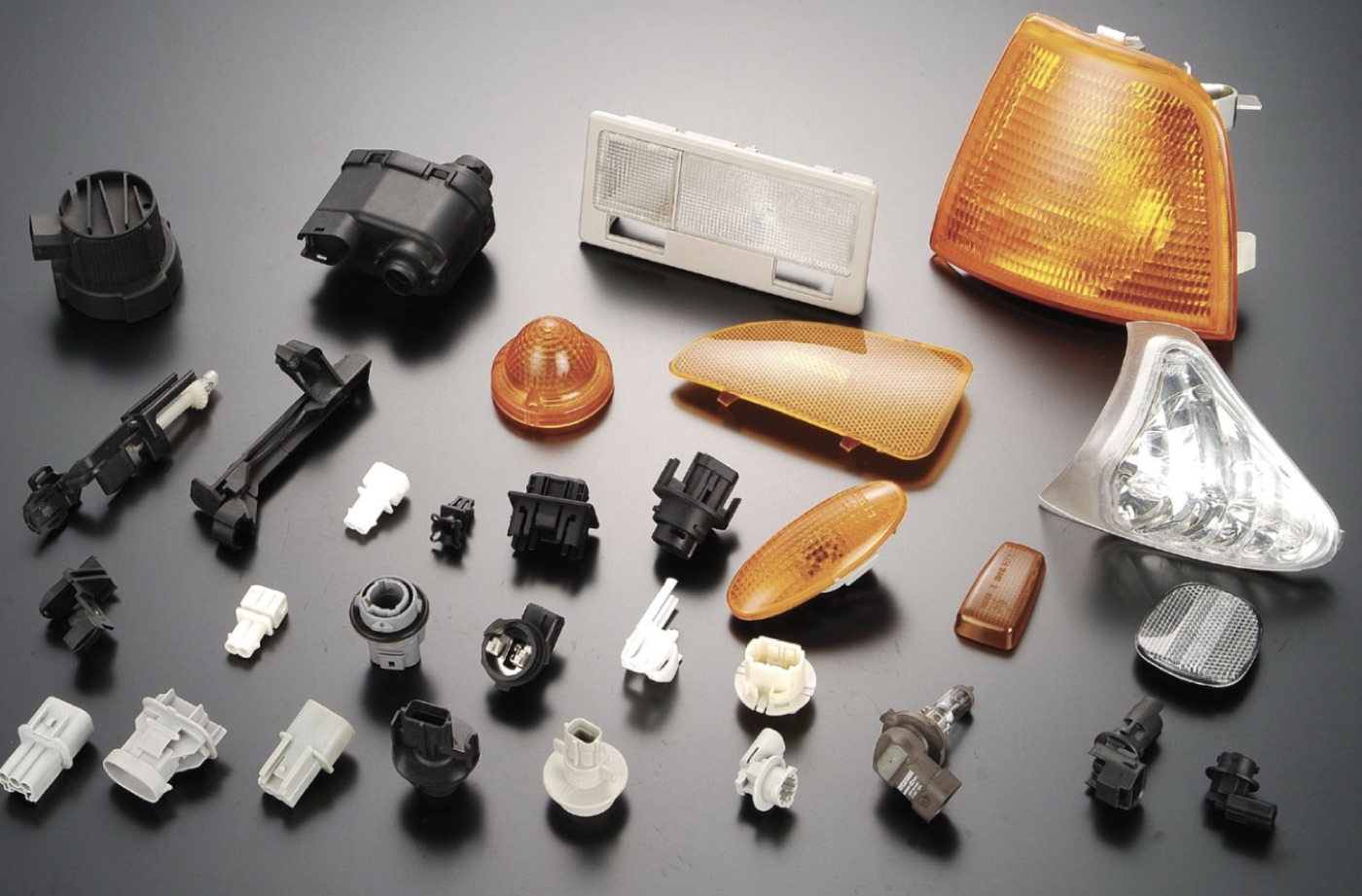
The most common M2P failure mode is treating the plastic part as a direct geometric substitute for the metal part. Plastic does not behave like metal: it shrinks during cooling (1.0–2.5% for semi-crystalline resins), deflects under sustained load (creep), and fractures at sharp corners where stress concentrations develop. A successful conversion requires redesigning the part geometry around plastic’s physical behavior, not just changing the material specification.
Wall thickness uniformity: Metal die-cast parts often have solid sections that provide rigidity through mass. In plastic, solid sections create sink marks, internal voids, and cycle times that make the part uneconomical. The correct approach is to core out solid regions and add a rib network — achieving equivalent stiffness at 40–60% of the material volume. Target nominal wall for structural PA66-GF30 components is 2.5–3.5 mm, with ribs at 50% of adjacent wall thickness.
Draft angles: Metal die-cast parts often have near-zero wall taper because metal shrinks away from the die during solidification. Injection-molded plastic shrinks onto the core, requiring 0.5–1.0° minimum draft per side on all vertical walls — scaling up to 3.0°+ on textured cosmetic surfaces. Every converted part geometry must be audited for zero-draft faces before tooling is committed.
Corner radii: Sharp internal corners are the primary stress-riser failure point in injection-molded thermoplastics. A minimum internal radius of 0.5× the adjacent wall thickness is required; 1.0× is preferred for load-bearing features. These fillets are typically a straightforward CAD change that costs nothing but eliminates a failure mode that would otherwise appear during validation testing.
Part consolidation: Metal assemblies frequently use multiple fastened or welded components. A well-executed M2P program consolidates 3–6 metal parts into a single injection-molded piece, eliminating fastener inventory, assembly labor, and joint failure modes simultaneously. Design for consolidation should be the first question at the functional analysis stage, not an afterthought.
Total Cost Analysis: Where the Savings Actually Come From
Metal-to-plastic conversion is often evaluated on raw material cost alone — which substantially understates the savings. The full lifecycle advantage comes from eliminating machining time, secondary finishing steps, and multi-part assembly. The table below reflects unit economics from documented M2P case studies at 10,000-unit annual volumes, comparing a die-cast aluminum structural housing to its PA66 GF30 injection-molded equivalent:
| Cost Factor | Die-Cast Aluminum | PA66 GF30 Injection Molded | Reduction |
|---|---|---|---|
| Raw material per unit | $5.20 | $1.80 | 65% |
| Machining time per part | 12 min | 0.5 min (injection cycle) | 96% |
| Secondary operations | 5 steps (deburr, drill, tap, coat, inspect) | 1 step (visual inspection) | 80% |
| Tooling investment | $50,000 (die-cast tooling) | $20,000 (injection mold) | 60% |
| Component weight | 1,250 g | 520 g | 58% lighter |
| Total lifecycle cost reduction | — | — | 25–50% |
The tooling investment advantage is particularly significant: injection molds for structural housings typically cost $15,000–$35,000 versus $40,000–$80,000 for equivalent die-cast tooling, with dramatically longer shot-life (1M+ shots for hardened P20/H13 steel injection molds vs. 200,000–500,000 cycles for most die-cast dies). Kaysun’s M2P cost analysis confirms that the crossover point where injection molding total program cost becomes favorable over die-casting is typically 5,000–20,000 annual units, depending on part complexity and the number of secondary operations being eliminated.
Evaluate Your Metal Part for Plastic Conversion with LongTeam
LongTeam Industrial can assess metal-to-plastic conversion opportunities against the quality and documentation requirements agreed for each program. Our engineers review functional loads, resin selection, DFM redesign, and tooling scope before a quotation is finalized.
Request an M2P Feasibility Review →What to confirm before supplier review
Use the drawing, material specification, expected demand, application conditions, and acceptance requirements to turn a general process discussion into a program-specific review.
- Which requirements does the current metal part satisfy?
- Which loads and environments govern material selection?
- How will inserts, threads, shielding, or heat be managed?
- What test plan will approve the converted design?
Continue the engineering review
Use the related guides and capability pages to connect this topic to part geometry, tooling, molding, and qualification decisions.