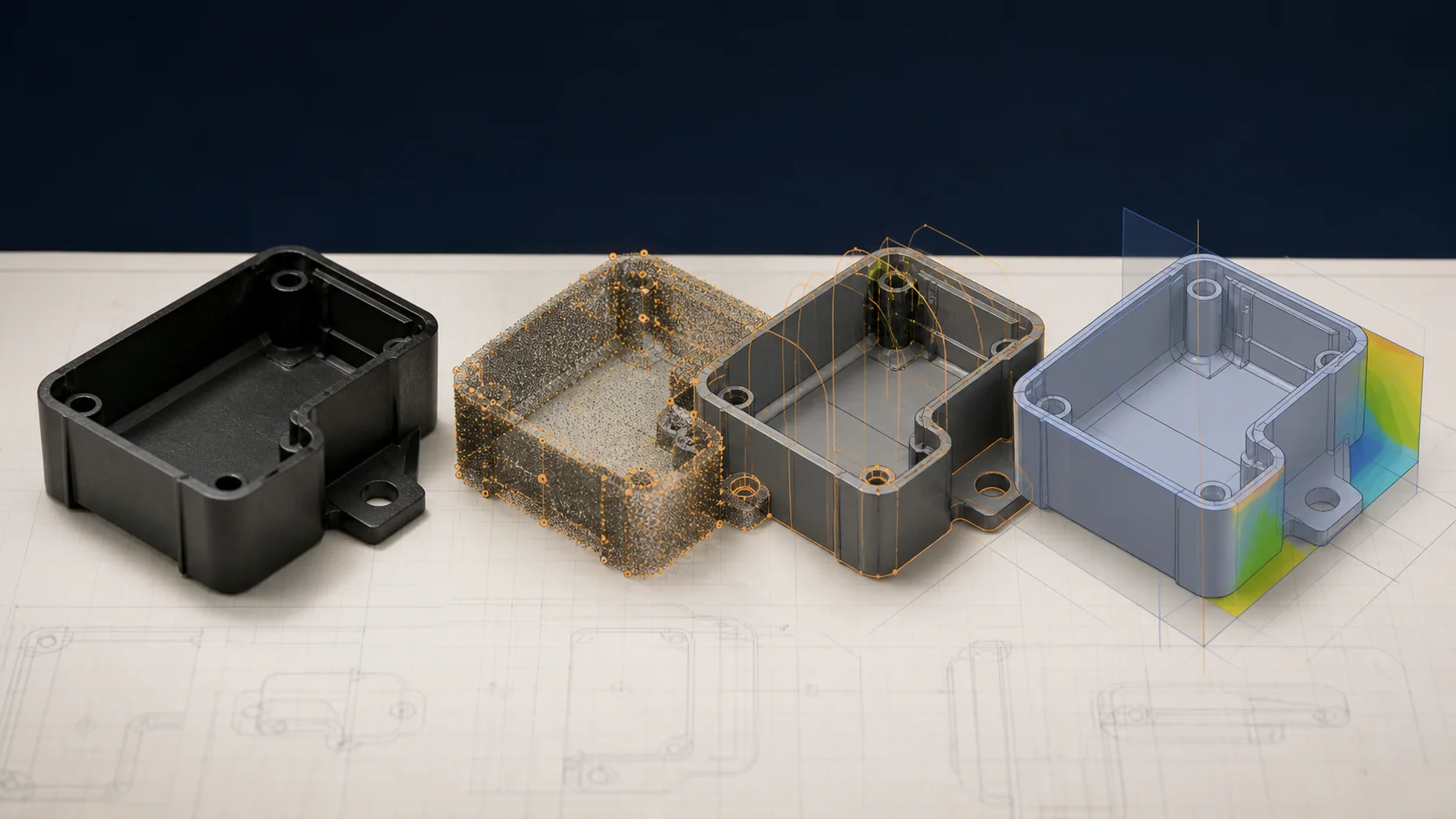
What matters most
- Define structural, thermal, electrical, sealing, flame, chemical, impact, and assembly requirements.
- Approve the grade, reinforcement, flame rating, conditioning, color, traceability, and substitution controls.
- Review part size, press and tool fit, inserts, fiber orientation, gates, vents, cooling, warpage, and handling.
Qualify the specific component, not the market trend
Evaluate the technical choice together with part requirements, tooling consequences, production controls, and the evidence required for approval.
Function
Define structural, thermal, electrical, sealing, flame, chemical, impact, and assembly requirements.
Material
Approve the grade, reinforcement, flame rating, conditioning, color, traceability, and substitution controls.
Process
Review part size, press and tool fit, inserts, fiber orientation, gates, vents, cooling, warpage, and handling.
Automotive evidence
Align customer-specific APQP, PPAP, special characteristics, testing, traceability, and change control.
Technical guide
The sections below retain the detailed design, tooling, process, and quality context needed to evaluate this topic beyond the summary.
Key Takeaways
- 1 Battery electric vehicles are projected to reach 52.9% of global light-vehicle sales by 2036 (up from 12.6% in 2024), creating massive new demand for injection-molded battery housings and structural plastic parts.
- 2 Thermoplastic battery enclosures reduce CO₂ footprint by up to 69% per kilogram vs. cast aluminum (polyamide: 2.1 kg CO₂/kg; aluminum: 6.8 kg CO₂/kg)—a direct advantage for OEM Scope 3 targets.
- 3 EV battery trays integrate up to 37 metal inserts plus 5 fasteners in a single shot, demanding insert molding expertise that IATF 16949–certified facilities are equipped to deliver at scale.
- 4 Enclosure materials must pass UL 2596 thermal runaway testing at 420°C and 250,000 kPa—a materials science and process control challenge that separates qualified EV suppliers from the field.
The plastics industry is experiencing its largest single demand shift in automotive history. As OEMs and Tier-1 suppliers transition battery trays, module housings, and control boxes from cast aluminum and stamped steel to injection-molded thermoplastics, the supply chain is actively qualifying new injection molding partners—and the eligibility bar is high. This guide covers which EV components are injection-molded, which materials and processes are required, and what a supplier qualification checklist looks like for an EV battery program.
Why EV Battery Housings Are Moving From Aluminum to Thermoplastics
According to GlobalData forecasts cited by Plastics Technology, battery electric vehicles will capture 52.9% of global light-vehicle sales by 2036, up from 12.6% in 2024, while ICE vehicles decline from 65.6% to 22.3%. This trajectory is driving an unprecedented volume of new injection-molding programs across battery enclosures, thermal management fittings, connector housings, and structural brackets.
The economic and sustainability case for thermoplastics is compelling. CompositesWorld reports that hybrid thermoplastic designs cut weight by 20% vs. all-aluminum configurations and deliver up to 20% cost savings and 45% CO₂ footprint reduction in production programs. On a material basis, polyamide generates approximately 2.1 kg CO₂ per kilogram vs. 6.8 kg CO₂ per kilogram for cast aluminum—a 69% reduction that directly supports OEM Scope 3 emissions targets.
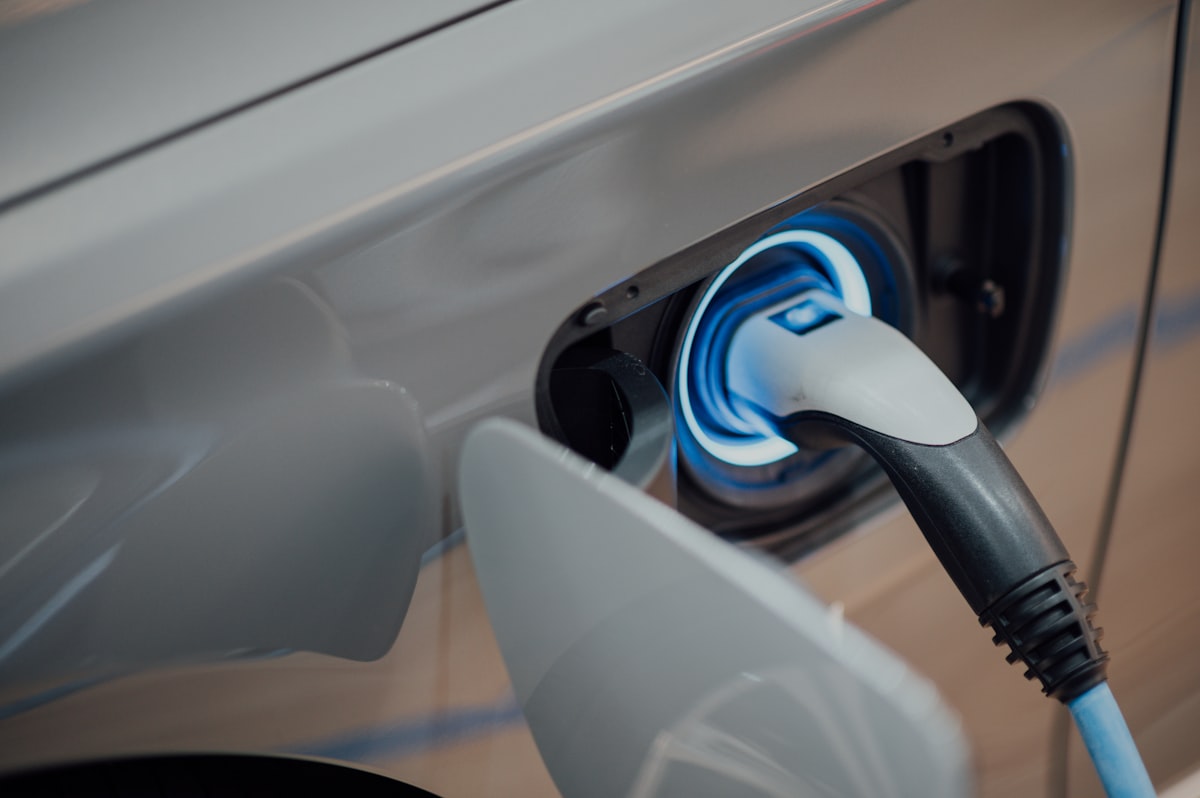
The composite EV battery enclosure market is projected to grow from $1.53 billion in 2024 to over $5.4 billion by 2030—nearly a 3.5× increase in six years, per Battery Tech Online market analysis. Kautex Textron, which won series production orders in 2023, now operates high-tonnage compression and injection lines in China for commercial EV battery enclosures. For injection molders with IATF 16949 certification and insert molding capability, this is one of the highest-growth automotive program categories of the decade.
Which EV Components Are Injection Molded
Not every EV battery component is made by injection molding, but several high-value assemblies are. Understanding these part categories helps procurement engineers identify where injection molding suppliers add the most value in an EV program.
| EV Component | Process | Material | Clamp Force |
|---|---|---|---|
| Battery tray / structural enclosure | Injection + insert molding | LGF-PP 30% (FR V0) | 3,000–11,000 T |
| Battery module housing | Injection + insert molding | 20–30% GF-PC or PA6-GF30 | 500–1,500 T |
| Battery cover / lid | Injection overmolding on organosheet | FR Stamax PP + 50% GF organosheet | 1,000–3,000 T |
| Connector blocks & fuse boxes | Precision injection molding | PBT-GF30 or PA66-GF | 100–500 T |
| Thermal management fittings | Injection molding | PA6 or PPS | 150–400 T |
| Control box housing (EMI) | Injection molding + shielding layer | CF-filled PA or PP (conductive) | 200–600 T |
The Lucid Air BEV serves as a benchmark for insert molding complexity: its battery module housing uses a one-shot insert-molded design in 20% GF Lexan 3412ECR polycarbonate, integrating 37 metal inserts and 5 molded-in fasteners in a single production step, as documented in Plastics Technology’s EV battery enclosure case study. This level of integration eliminates secondary assembly operations and improves dimensional consistency across the module stack.
Material Selection: LGF-PP, GF-PC, PBT, and PA6 Compared
Material choice for EV battery components is driven by three simultaneous requirements: structural performance, flame retardancy (UL 94 V0 minimum), and compatibility with insert molding or overmolding processes. Plastics Today reports that SABIC’s Stamax LGF-PP compounds are leading adoption for battery trays, while short-glass PC and PA6 formulations dominate module housings.
| Material | FR Rating | Tensile Strength | Primary EV Application | Key Process Note |
|---|---|---|---|---|
| LGF-PP (30% long glass) | UL 94 V0 | ~120 MPa | Battery tray, structural lower enclosure | Requires low-compression screw; 22,000 psi injection pressure |
| GF-PC (20–30% glass) | UL 94 V0 | 130–160 MPa | Module housing (Lucid Air application) | Dry to <0.02% moisture; high mold temp (90–110°C) |
| PA6-GF30 | UL 94 V0 (with FR additive) | ~180 MPa | Module housing, structural brackets | Moisture absorption affects as-molded dims; condition before measurement |
| PBT-GF30 | UL 94 V0 | ~130 MPa | Connector blocks, fuse box housings | Low moisture sensitivity; excellent dimensional stability |
| CF-filled PA / PP (conductive) | UL 94 V0 | Varies by CF% | Control box (CISPR 25 EMI shielding) | Abrasive to screw/barrel; bimetallic barrel treatment required |
A critical processing note for LGF-PP: standard screw geometries degrade glass fiber length by 40–60%, eliminating the structural advantage of long-glass reinforcement. Engel’s production validation for EV battery tray programs specifies a 190 mm screw with L/D ratio of 25 and a sequential valve-gated hot runner, achieving injection pressures of approximately 22,000 psi to fill large cavities before the LGF-PP freezes at nominal wall thicknesses of 3–4 mm.
Safety Standards: UL 2596, CISPR 25, and Thermal Runaway Compliance
EV battery enclosure materials face a dual compliance requirement: surviving a thermal runaway event while providing electromagnetic compatibility for power electronics. The two primary standards are:
UL 2596 (Thermal and Mechanical Performance of Battery Enclosure Materials): Evaluates materials under combined pressure, ablative force, heat, and fire conditions simulating a thermal runaway event. Per the UL Solutions standard overview, test conditions reach 420°C and 250,000 kPa (36,000 psi) internal pressure. SABIC’s Stamax 30YH570 FR-LGF-PP passes in a 4 mm panel configuration. A UL 94 V0 rating alone does not satisfy UL 2596 requirements.
CISPR 25 (Automotive EMI Standard): Power electronics housings must meet automotive electromagnetic interference limits to prevent cross-interference with vehicle communication systems. Research published in PMC (2024) demonstrates that carbon fiber veil layers integrated during the molding process achieve sufficient shielding effectiveness to meet CISPR 25 Class 5 limits without a separate metallic shield—reducing part count and assembly cost in a single molding step.
Both standards must be addressed during the material qualification phase, typically 12–18 months before production launch. This means the injection molding supplier must be engaged at the DFM and material selection stage—not after the mold is cut.
Supplier Qualification: Six Requirements for EV Battery Programs
Qualifying an injection molding supplier for an EV battery program requires substantially more verification than a standard plastic component. The following six areas are consistently required across OEM and Tier-1 qualification processes:
- IATF 16949 certification: Suppliers without IATF 16949 cannot pass Tier-1 audits. The standard requires real-time SPC monitoring of all critical injection parameters and documented PFMEA and Control Plans. IATF 16949 requires Cpk > 1.33 for critical dimensions; most OEMs specify Cpk > 1.67 for safety-critical features.
- PPAP Level 3 submission: Full 18-element package including dimensional results (30+ pieces), MSA studies, Cpk/Ppk initial process studies, PFMEA, Control Plan, and signed PSW. LGF-PP battery tray programs typically require 6–8 weeks of PPAP testing due to fiber orientation characterization and structural validation.
- UL 2596 material documentation: Letter of conformance from the resin supplier or independent test data demonstrating the specific compound passes the thermal runaway test. A UL 94 V0 rating does not substitute for UL 2596 test data.
- Insert molding process capability: Verified ability to locate and retain metal inserts to positional tolerances of ±0.1 mm or better across production runs. Robot-assisted insert placement with in-mold verification is the Tier-1 expectation for high-insert-count battery assemblies.
- Press tonnage and shot weight capability: Battery module housings are achievable on 500–1,500 ton presses. Structural battery trays require 3,000+ tons and shot weights up to 7.5 kg of filled material in current production programs.
- Process traceability: EV programs typically require 15-year part traceability aligned with vehicle lifetime warranties. Every production shot must be traceable to resin lot, process parameters, and cavity number.
Discuss Your EV Battery Component Program
LongTeam can assess automotive injection-molding and insert-molding programs against the required feasibility, documentation, and PPAP scope. Whether you are qualifying a new battery module housing or converting an aluminum bracket to thermoplastic, our engineering team can assess program feasibility, material options, and tooling requirements.
Contact Our Engineering TeamWhat to confirm before supplier review
Use the drawing, material specification, expected demand, application conditions, and acceptance requirements to turn a general process discussion into a program-specific review.
- Which battery-system component and function are in scope?
- Which standards and customer specifications apply to that part?
- Does the proposed supplier have suitable tool, machine, material, and insert capability?
- What production evidence is required for release?
Standards and source context
Confirm the current revision and the customer-specific requirements that apply to the program.
Continue the engineering review
Use the related guides and capability pages to connect this topic to part geometry, tooling, molding, and qualification decisions.