Insert Molding & Overmolding Services
Encapsulate metal hardware and bond soft-touch elastomers in a single molded part — engineered, tooled, and produced under one roof at LongTeam's IATF 16949 and ISO 13485 certified facility in Tainan, Taiwan.
- Service type
- Insert molding & overmolding (multi-material)
- Engagement model
- OEM / ODM one-stop — design, tooling, molding, assembly
- Press range
- 80–850 tonnes
- Tooling
- In-house mold design & manufacturing
- Insert types
- Threaded brass inserts, metal shafts, terminals, rigid sub-assemblies (representative examples)
- Overmold materials
- TPE, TPU, silicone (LSR) over rigid substrates (representative examples)
- Certifications
- ISO 9001, IATF 16949, ISO 13485
- Location
- Anding District, Tainan, Southern Taiwan
Insert Molding & Overmolding: Two Routes to a Multi-Material Part
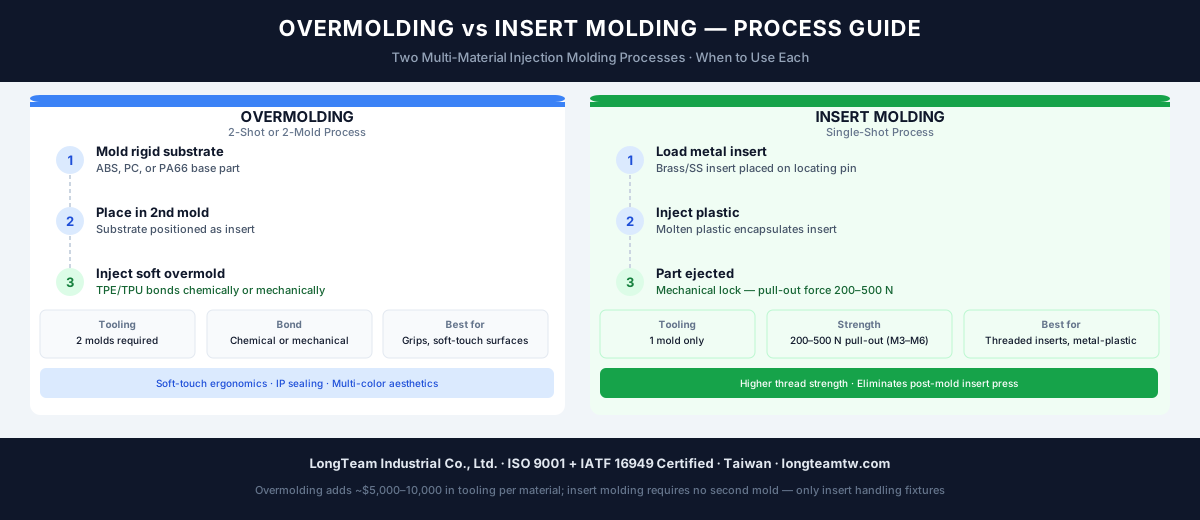
Insert molding places a pre-formed component — a threaded brass insert, metal shaft, terminal, or rigid sub-assembly — into the cavity before injection, so the thermoplastic mechanically encapsulates it in one shot. Overmolding bonds a second material, typically a soft TPE or TPU, over a fully cured rigid substrate to add grip, sealing, vibration damping, or color. Both eliminate downstream assembly and adhesives, consolidating part count into a single integrated component. Choosing correctly between them — and validating it before steel is cut — is where program cost and field reliability are decided.
- Insert molding: metal-to-plastic encapsulation in a single cavity, single shot
- Overmolding: rigid substrate plus a bonded soft or contrasting second material
- Both replace screws, adhesives, and secondary assembly steps with one molded part
LongTeam's Capability: In-House Design Through Validated Production
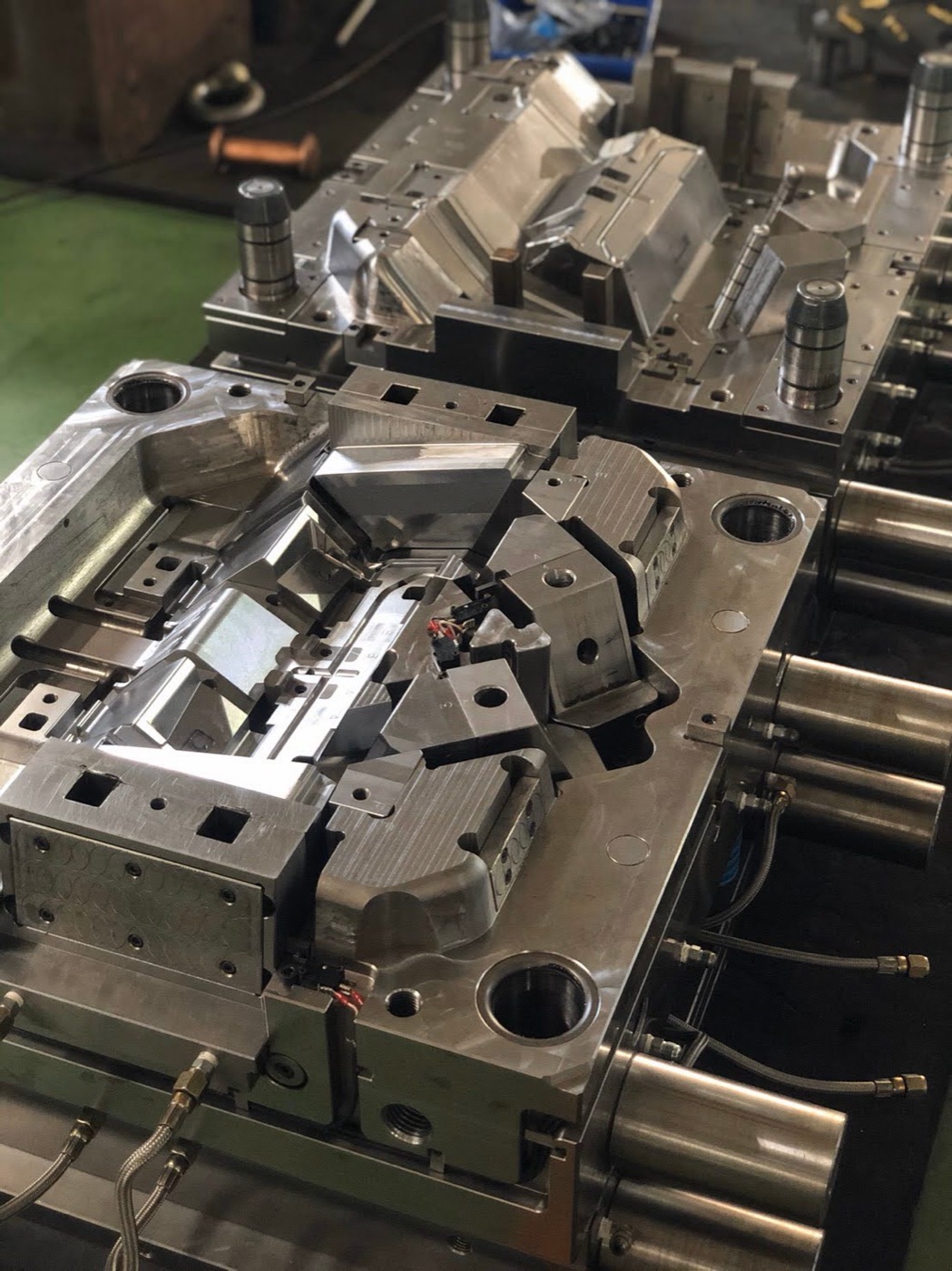
As an OEM/ODM one-stop manufacturer, LongTeam runs the full path in-house — mold design, tooling, injection molding, post-processing, and assembly — so insert locating, overmold interfaces, and material compatibility are solved by the same team that cuts the steel. Our presses span 80–850 tonnes, supporting parts from small precision encapsulations to large structural housings. Insert-molded programs are produced with positively located, precision-ground locating features; overmolding programs are run across two tools with controlled substrate preparation and interface geometry. For programs where a single tool and one bonded cycle are preferred, our two-shot (2K) molding capability offers an alternative route.
- In-house mold design and tooling — DFM through validated steel
- 80–850 tonne press range for small precision to large structural parts
- Insert loading, overmold bonding, finishing, and assembly under one roof
Why It Matters to Your Program
For sourcing managers and design engineers, the value of insert molding and overmolding is measured in eliminated operations, fewer line items, and parts that survive in the field. Molded-in inserts can resist thread-stripping and pull-out better than post-mold heat-set alternatives, while a chemically bonded overmold delivers a soft-touch or sealing surface that will not delaminate under flex or thermal cycling — provided the substrate and overmold are compatible. The highest-risk decision is material pairing; an incompatible pair fails at the interface in service. LongTeam evaluates compatibility, bond strategy, and tooling approach during DFM, before any tooling cost is committed.
- Improved pull-out and strip-torque resistance versus secondary heat-set inserts
- Soft-touch grip, sealing, and vibration damping without adhesives
- Lower assembled part count and supply-chain complexity
Quality, Materials & Certifications
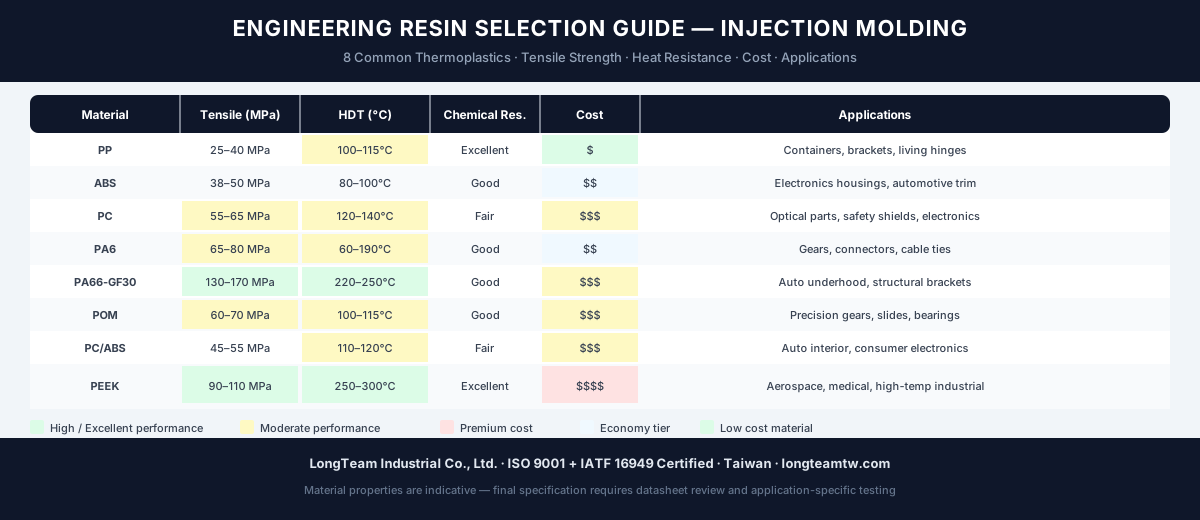
LongTeam holds ISO 9001, IATF 16949 for automotive programs, and ISO 13485 for medical devices — so insert-molded and overmolded parts can be produced to documented, audited quality requirements. We work across engineering and commodity resin families, with overmold pairings commonly built on TPE, TPU, or silicone over rigid substrates such as ABS, PC, PA, or PP. Every production mold runs through our structured trial process before approval, and full PPAP/APQP documentation is available for automotive programs. Validate your material pair, bond method, and tooling plan with our engineering team before committing to steel.
- ISO 9001, IATF 16949 (automotive), ISO 13485 (medical devices)
- Engineering and commodity resins; TPE / TPU / LSR overmold pairings
- PPAP / APQP documentation available for automotive programs
Frequently asked questions
Related capabilities & industries
Get a free DFM review & quote in 24 hours.
Send a drawing or just describe the part — our engineers will review it and respond within one business day.