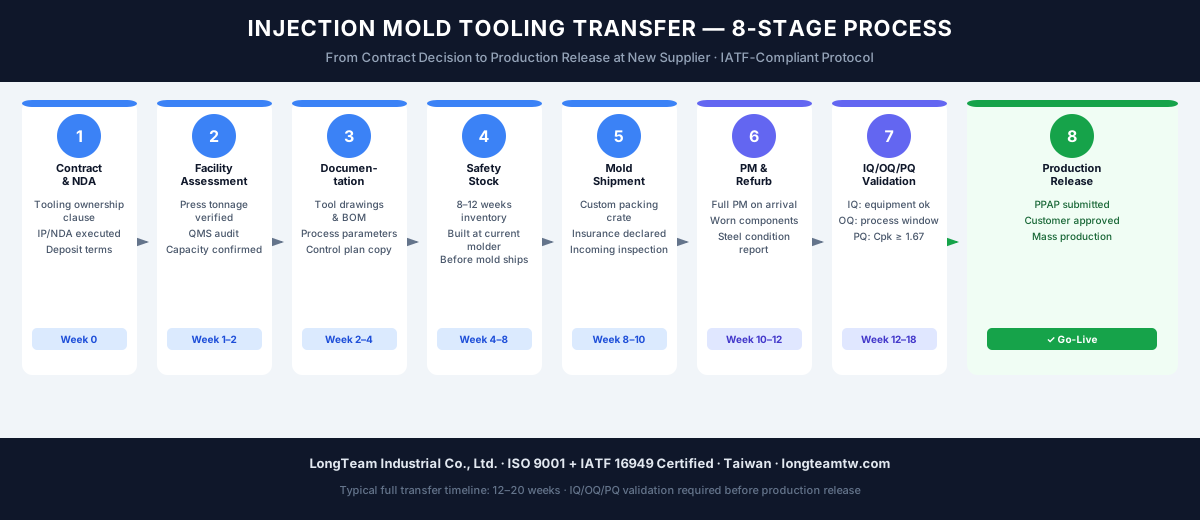
What matters most
- Request a sample DFM approach and confirm who designs, builds, trials, and maintains the tool.
- Verify current certificate scope and the inspection, traceability, calibration, and change-control system.
- Clarify tool ownership, maintenance, payment, warranty, intellectual property, freight, and Incoterms.
Compare suppliers on evidence and program fit
Evaluate the technical choice together with part requirements, tooling consequences, production controls, and the evidence required for approval.
Engineering
Request a sample DFM approach and confirm who designs, builds, trials, and maintains the tool.
Quality
Verify current certificate scope and the inspection, traceability, calibration, and change-control system.
Commercial
Clarify tool ownership, maintenance, payment, warranty, intellectual property, freight, and Incoterms.
Execution
Use a controlled milestone, trial, or first-tool program before expanding scope.
Technical guide
The sections below retain the detailed design, tooling, process, and quality context needed to evaluate this topic beyond the summary.
Key Takeaways
- 1 Supply chain resilience is the #1 macro trend in manufacturing: 68% of manufacturing leaders now prioritize nearshoring or onshoring — and Taiwan’s 40-year precision manufacturing heritage makes it the premium-tier alternative to pure China sourcing.
- 2 ISO 9001 is the minimum bar for any serious supplier; IATF 16949 is mandatory for automotive OEMs and distinguishes process-driven manufacturers from commodity shops — always ask to see the certificate and its expiry date.
- 3 Three contract clauses prevent 90% of sourcing disputes: explicit tooling ownership, a mutual NDA covering part geometry and resin formulations, and written T1/T2 acceptance criteria agreed before any deposit is placed.
- 4 A typical steel-tooled project runs 6–10 weeks from CAD approval to T1 samples; budget for at least one T2 cycle (3–5 additional working days), since roughly 60% of tools require dimension adjustments after the first shot.
Why Taiwan — and Why Now?
The calculus of offshore sourcing shifted dramatically in 2025. US tariff escalation, geopolitical risk premiums on China-origin goods, and persistent quality-control gaps in low-cost supply chains have pushed OEM procurement teams to reassess their supplier maps. According to Fictiv’s 2025 State of Manufacturing report, 68% of manufacturing leaders now prioritize onshoring or nearshoring as a key supply chain strategy — and 52% identify supplier quality, reliability, and compliance as their most significant sourcing challenge.
Taiwan sits at a compelling intersection. Its precision manufacturing sector has served international OEM supply chains for decades, building a dense ecosystem of certified mold makers, resin specialists, and CMM-equipped quality labs. Taiwanese manufacturers routinely carry both ISO 9001 and IATF 16949 certifications, and English-language engineering communication is standard rather than exceptional. For OEMs moving volume out of China or qualifying a secondary source, Taiwan offers lower geopolitical risk, stronger IP enforcement under a robust legal framework, and a mature DFM-to-production workflow that compresses ramp time.
The challenge is qualification: Taiwan has dozens of credible injection molding partners, and the difference between a world-class supplier and an under-equipped shop is not always apparent from a website or a polished brochure. The checklist below gives procurement teams a systematic framework for distinguishing the two.
The 8-Point Supplier Qualification Checklist
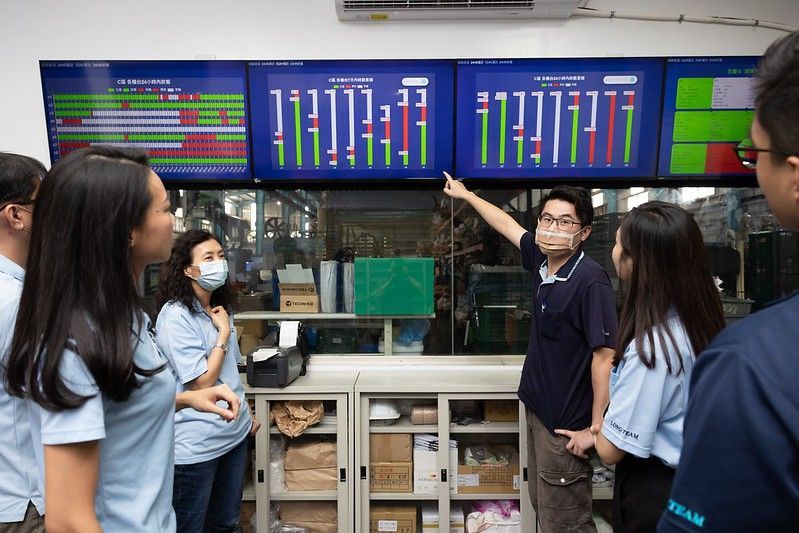
Based on evaluation frameworks published by Crescent Industries and Kaysun Corporation — two of North America’s most-cited authorities on injection molder qualification — the eight criteria below form the minimum viable framework for any international OEM sourcing engagement.
- 1 Certifications & Regulatory Compliance. Request the current certificate PDFs — not just logos on a website. For automotive parts, IATF 16949 is non-negotiable. For general industrial or consumer products, ISO 9001:2015 is the minimum. Verify the issuing body is IATF-recognized and confirm the expiry date has not lapsed.
- 2 In-House Tooling Capability. Suppliers that build molds in-house control quality end-to-end and typically deliver faster T1 timelines. Ask explicitly: “Do you CNC machine, EDM, and assemble the mold at your own facility?” Outsourced tooling introduces handoff delays and diffused accountability that make rework cycles unpredictable.
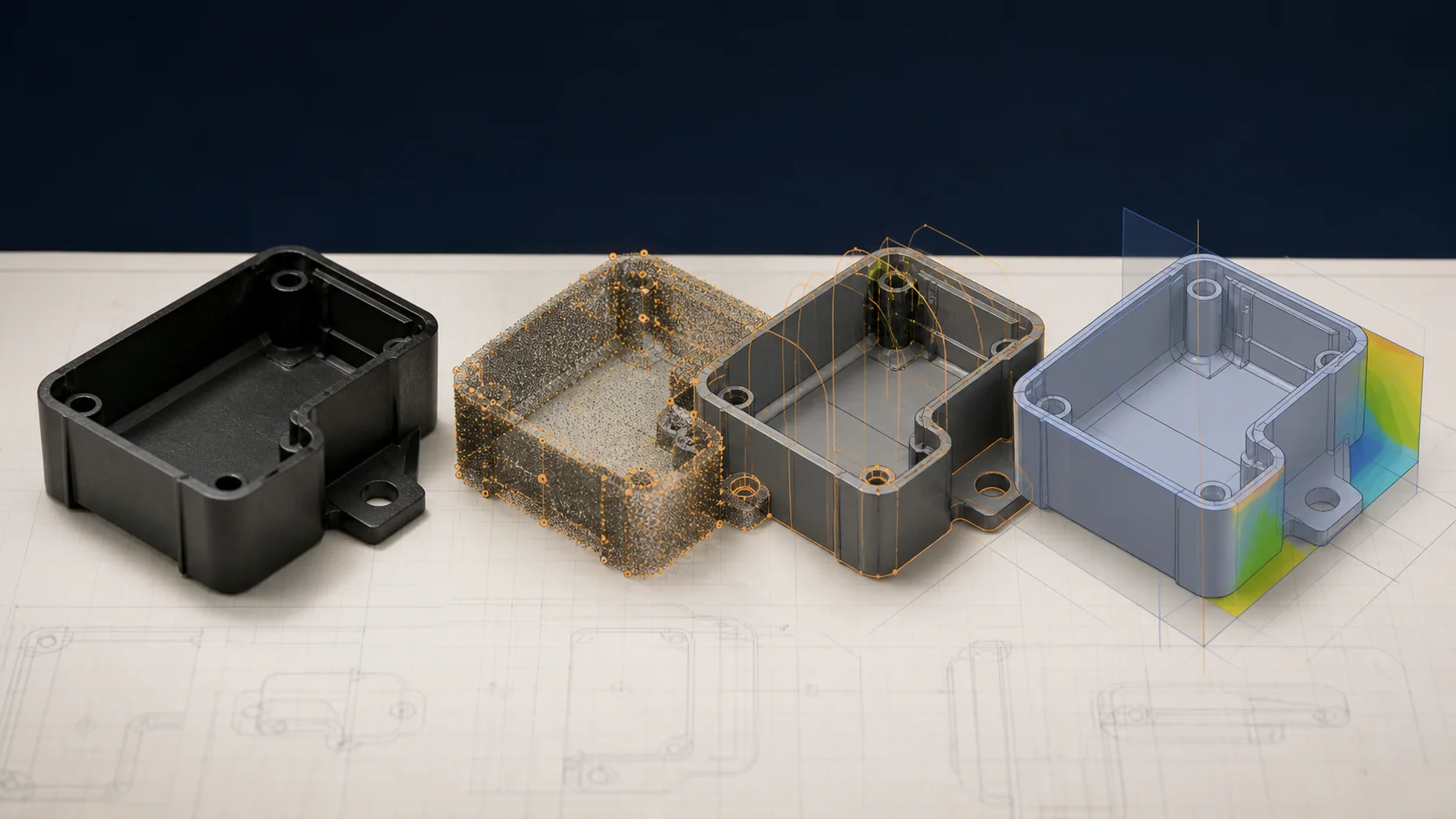
- 3 DFM Review Process. A credible partner will flag design issues before accepting any tooling payment — not after steel is cut. Ask for a sample DFM report from a past project. Effective DFM can reduce total project costs by 10–50% versus proceeding to tooling without systematic design review.
- 4 Quality Systems & Traceability. Ask whether the supplier uses SPC in production and can provide Cpk data for critical dimensions. Ask the supplier to show the customer-defined capability target and supporting study for each critical characteristic; do not infer one universal Cpk threshold from IATF 16949 certification. Confirm that resin batch traceability is maintained from incoming material to outbound shipment.
- 5 Tooling Ownership & IP Protection. Confirm in writing that your company owns the mold upon full payment. Request a mutual NDA before sharing 3D models or resin specifications. Taiwanese suppliers operating under ISO and IATF frameworks are contractually obligated to document and protect customer-supplied design data — ask to review their confidentiality policy before sending any files.
- 6 Engineering Communication. Verify that a dedicated English-speaking project engineer — not just a sales contact — will own the program from DFM through production approval. Miscommunication during the tooling phase is the single largest cause of costly rework in cross-border injection molding programs.
- 7 Production Capacity & Scalability. Request the machine tonnage range, number of active presses, and documented monthly capacity ceiling. Confirm the supplier has successfully handled programs at both your minimum viable MOQ and your projected peak annual volume before committing to tooling investment.
- 8 Post-Molding & Logistics Services. Full-service partners offer secondary operations (pad printing, ultrasonic welding, insert installation), outbound QC inspection, and EXW or DDP export packaging. A single-source supplier eliminates the overhead of coordinating multiple Taiwanese sub-suppliers and reduces total landed cost.
Certifications Decoded: What Each Standard Actually Guarantees
Not all quality certifications carry the same weight. The table below summarizes what each standard requires from a manufacturer and the business risk of accepting a supplier who only holds the lower-tier credential. Cost data sourced from Seawin Industrial’s certification guide and Xometry’s IATF 16949 resource.
| Certification | Scope | Key Requirements | Cert. Cost | Who Requires It |
|---|---|---|---|---|
| ISO 9001:2015 | All industries | PDCA quality system, customer focus, process documentation, internal audit | $8,000–$15,000 | Minimum for most industrial OEMs |
| IATF 16949:2016 | Automotive supply chain | APQP, PPAP, FMEA, SPC, MSA; Cpk > 1.67 for critical dims; full resin traceability | $15,000–$40,000 | Mandatory for Tier 1/2 automotive suppliers |
| ISO 13485:2016 | Medical devices | Design verification, process validation, sterile control, risk management (ISO 14971) | $12,000–$30,000 | Required for FDA/CE medical device supply chains |
T1/T2 Sample Timelines: Setting Realistic Expectations
Timeline misalignment between OEM buyers and offshore molders is one of the most common sources of project friction in international sourcing. The phase-by-phase breakdown below — compiled from Zetar Mold’s lead-time analysis — gives procurement teams a defensible baseline for scheduling and contract negotiation.
| Phase | Steel Mold (Single-Cavity) | Aluminum Mold (Single-Cavity) | Notes |
|---|---|---|---|
| DFM Review & Mold Design | 3–7 days | 3–5 days | Buyer feedback speed is the critical path |
| CNC Machining & EDM | 10–22 days | 7–12 days | Longest phase; limited compression potential |
| Polishing & Assembly | 3–5 days | 2–4 days | — |
| T1 Trial + CMM Inspection | 3–7 days | 3–5 days | Includes dimensional report delivery to buyer |
| T2 Modifications (if needed) | +3–5 days | +2–4 days | ~60% of tools require at least one T2 cycle |
| Total to Mold Approval | 6–10 weeks | 4–7 weeks | Add 2–4 weeks for production run post-approval |
Prompt buyer feedback can reduce avoidable waiting between DFM decisions, tooling updates, and approval gates. Define the review cadence, material-ordering responsibilities, and handoff owners for the actual program before tooling begins.
Ready to Qualify LongTeam as Your Taiwan Injection Molding Partner?
LongTeam Industrial supports international OEM programs through integrated tooling and injection molding. Send the available CAD files so the team can confirm DFM scope, engineering ownership, required documentation, and quotation timing for your program.
Contact LongTeam →What to confirm before supplier review
Use the drawing, material specification, expected demand, application conditions, and acceptance requirements to turn a general process discussion into a program-specific review.
- Who owns and maintains the production mold?
- Which current certificates and site scopes apply?
- How are drawings, changes, deviations, and approvals controlled?
- What is included in the quoted tooling and part price?
Continue the engineering review
Use the related guides and capability pages to connect this topic to part geometry, tooling, molding, and qualification decisions.