What matters most
- Confirm the product description, tariff classification, origin, applicable duties, exclusions, and responsible customs adviser.
- Assess ownership, location, condition, compatibility, documentation, maintenance, and transfer permission.
- Verify engineering, molding, quality, capacity, certificates, communication, and change-control evidence.
Build a current landed-cost and transfer model
Evaluate the technical choice together with part requirements, tooling consequences, production controls, and the evidence required for approval.
Classification
Confirm the product description, tariff classification, origin, applicable duties, exclusions, and responsible customs adviser.
Tooling
Assess ownership, location, condition, compatibility, documentation, maintenance, and transfer permission.
Supplier
Verify engineering, molding, quality, capacity, certificates, communication, and change-control evidence.
Landed cost
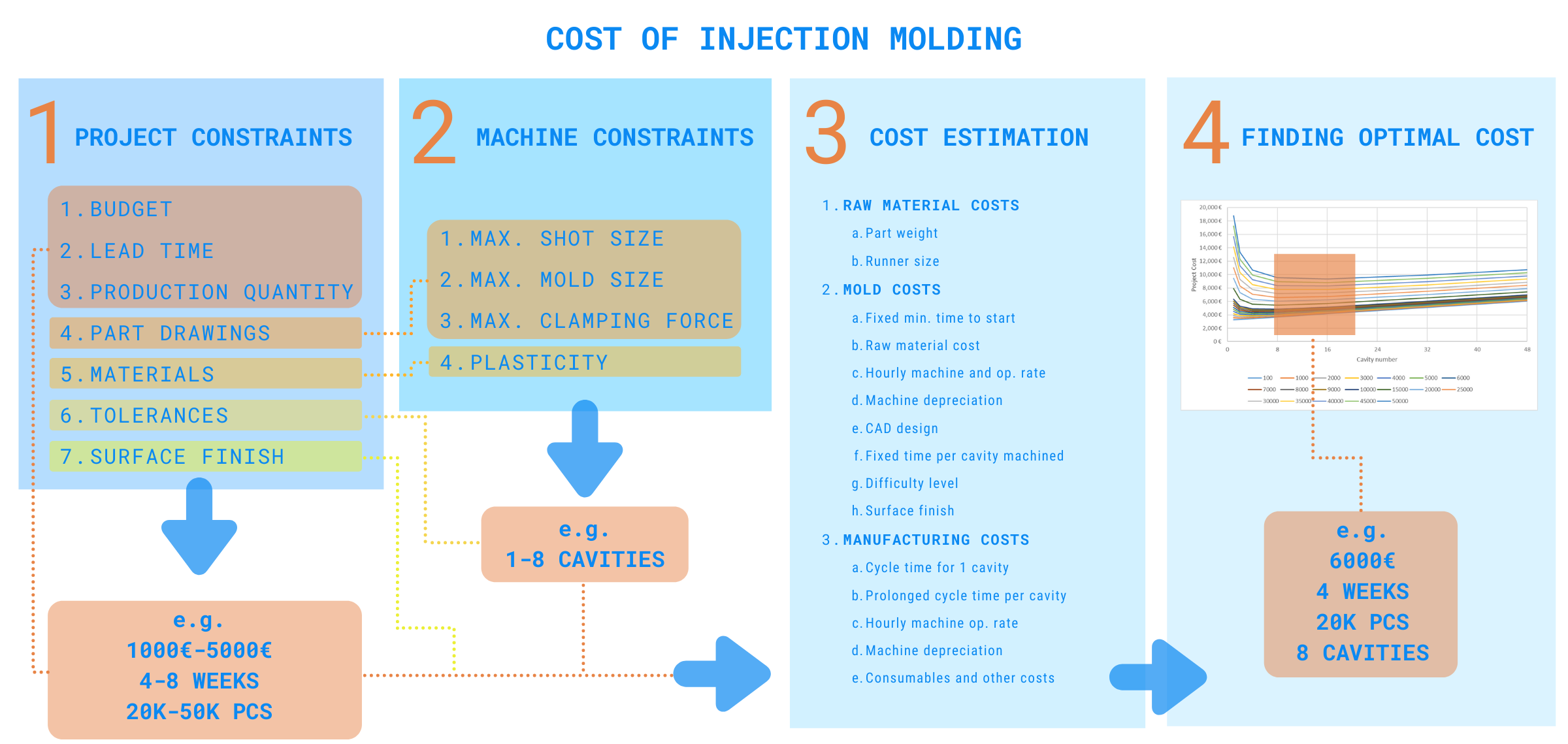
Compare tooling, parts, validation, freight, duty, inventory, quality risk, ramp, and contingency with dated assumptions.
Technical guide
The sections below retain the detailed design, tooling, process, and quality context needed to evaluate this topic beyond the summary.
Build the China+1 business case from current inputs
A useful sourcing comparison separates tooling, recurring part cost, logistics, duties, qualification, inventory, and operational risk. Do not compare only the ex-works unit price. Request the same controlled drawing, model, resin specification, annual volume, packaging requirements, and quality deliverables from every candidate.
| Cost or risk input | Evidence to collect | Why it changes the decision |
|---|---|---|
| Tooling and modification | Tool specification, ownership terms, condition report, modification quotation | A low part price can be offset by repair, interface, or maintenance work |
| Part and secondary operations | Resin, cycle assumptions, cavity count, finishing, assembly, inspection, packaging | Quotes are comparable only when scope and acceptance criteria match |
| Duties and origin | Current classification and origin analysis from a qualified customs source | Rates and measures can change; the correct treatment is shipment-specific |
| Freight and inventory | Route, Incoterm, shipment size, transit range, safety-stock policy | Working capital and interruption exposure belong in landed cost |
| Qualification and change control | FAI or PPAP scope, test plan, approval authority, change-notification rules | Validation effort can determine the real transition schedule |
Qualify the receiving injection molding supplier
Country alone does not establish capability. Evaluate the manufacturing site against the part, tool, resin, volume, documentation, and regulatory requirements. Ask for evidence that can be checked during technical review or audit.
- Tooling control: Who owns the mold, who may modify it, and how are drawings, revisions, maintenance, and spare components controlled?
- Process fit: Can the site support the mold interface, shot size, material handling, insert or two-shot requirements, and secondary operations?
- Quality evidence: Which dimensional, material, capability, traceability, FAI, or PPAP records are included in the quoted scope?
- Certification scope: Is each required certificate current, and does it cover the named manufacturing site and relevant activity?
- Change management: Which material, tool, machine, process, and subcontractor changes require customer notification or approval?
- Communication: Who owns engineering questions, corrective actions, shipment documents, and escalation across time zones?
Transfer an existing mold through controlled gates
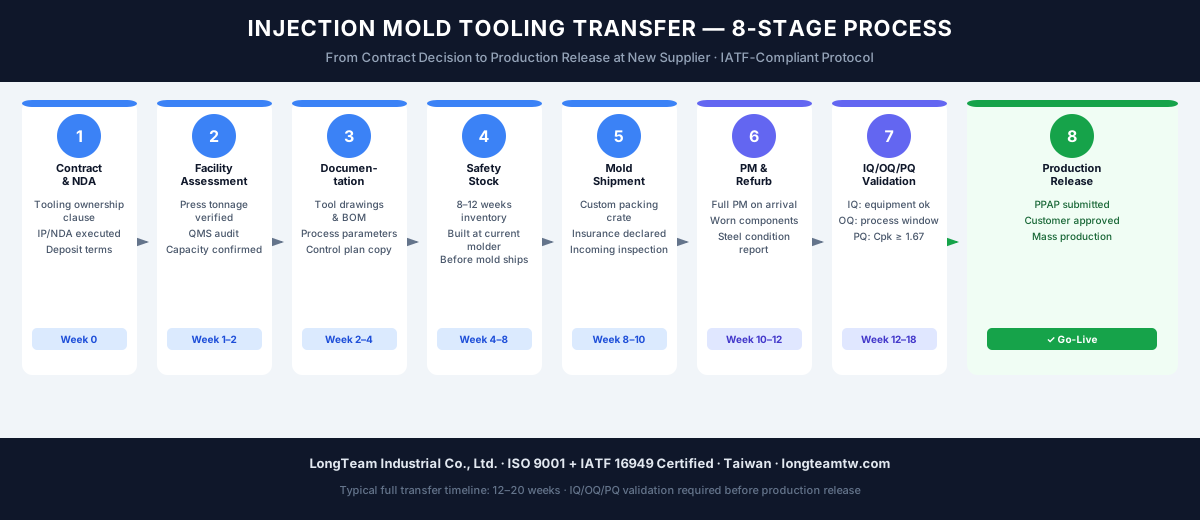
- 1. Establish ownership and release authority. Confirm the contract, tool identification, location, and authority to inspect, move, and modify the mold.
- 2. Assemble the technical record. Collect mold drawings, steel and component records, maintenance history, shot history where available, approved samples, process settings, resin data, and open issues.
- 3. Inspect before shipment. Record mold condition, interfaces, hot-runner or controller requirements, spare parts, corrosion protection, and transport packaging.
- 4. Review receiving-site compatibility. Confirm press and auxiliary interfaces, handling, utilities, material preparation, inspection capacity, and any required mold modifications.
- 5. Agree the trial and validation plan. Define sample quantity, material lot, drawing revision, measurement method, appearance standard, process study, documentation, and approval authority.
- 6. Protect supply continuity. Set inventory and parallel-production decisions from actual demand, qualification risk, and recovery time rather than a generic number of weeks.
For a deeper engineering checklist, continue to the injection mold tooling transfer guide and the first article inspection guide.
Use authoritative sources for the variables that change
For United States imports, confirm current tariff actions through USTR tariff-action materials, classification and rulings through U.S. Customs and Border Protection, and the current tariff schedule through the U.S. International Trade Commission. These sources inform the analysis; a qualified broker or counsel should confirm the treatment for the actual shipment.
Prepare a comparable RFQ
Request a Taiwan sourcing and tooling review
Send the controlled 3D model and drawing, resin specification, annual and lifetime volume, existing tool record if applicable, quality-document requirements, destination, and commercial assumptions. LongTeam can review the manufacturing and tooling scope; tariff classification and legal treatment remain the buyer’s responsibility to verify with qualified trade advisers.
What to confirm before supplier review
Use the drawing, material specification, expected demand, application conditions, and acceptance requirements to turn a general process discussion into a program-specific review.
- Who confirms current classification, origin, and duty treatment?
- Will an existing tool transfer or will a new tool be built?
- Which parts and records must be requalified?
- How does the decision change under different demand and logistics scenarios?
Standards and source context
Confirm the current revision and the customer-specific requirements that apply to the program.
Continue the engineering review
Use the related guides and capability pages to connect this topic to part geometry, tooling, molding, and qualification decisions.