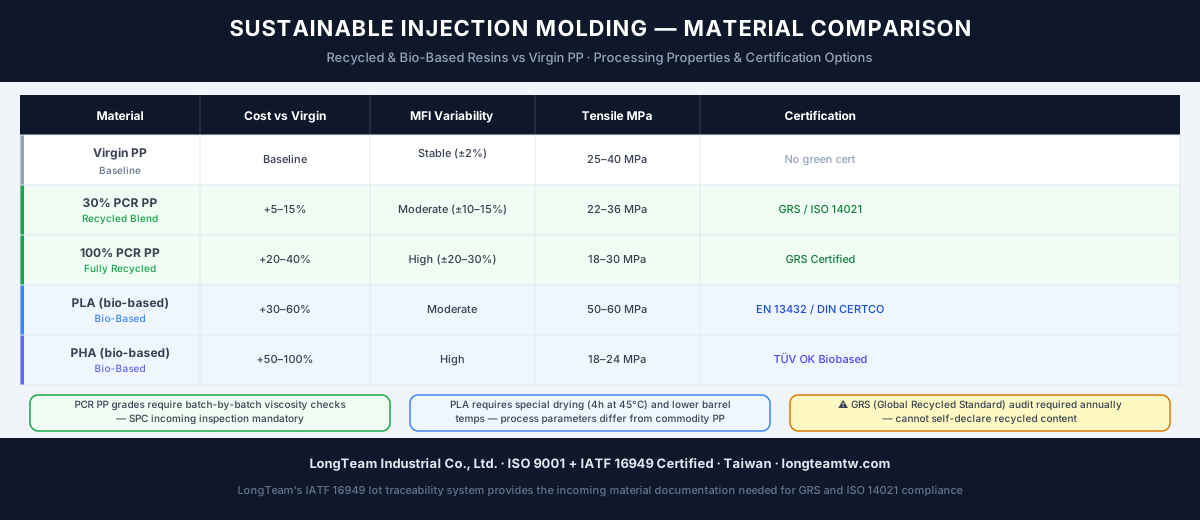
What matters most
- Define market, food type, temperature, duration, repeated use, cleaning, and contact area.
- Approve resin, colorant, additives, recycled content, supplier declarations, and substitution controls.
- Review contamination prevention, regrind policy, traceability, cleaning, handling, packaging, and records.
Build compliance around the intended food contact
Evaluate the technical choice together with part requirements, tooling consequences, production controls, and the evidence required for approval.
Use conditions
Define market, food type, temperature, duration, repeated use, cleaning, and contact area.
Material
Approve resin, colorant, additives, recycled content, supplier declarations, and substitution controls.
Manufacturing
Review contamination prevention, regrind policy, traceability, cleaning, handling, packaging, and records.
Evidence
Determine which declarations, migration tests, supporting documents, and responsible experts are required.
Technical guide
The sections below retain the detailed design, tooling, process, and quality context needed to evaluate this topic beyond the summary.
Key Takeaways
- 1 FDA compliance for food-contact plastics is governed by 21 CFR Part 177 (indirect food additives: polymers); EU compliance by Regulation (EU) No. 10/2011, which sets an overall migration limit of 10 mg/dm² (or 60 mg/kg food simulant) and requires a formal Declaration of Conformity.
- 2 Resin compliance is part-specific, not blanket: colorants, additives, and mold-release agents must each be individually confirmed against the applicable positive list — a clean base resin alone is insufficient for either FDA or EU compliance.
- 3 The EU’s Packaging and Packaging Waste Regulation (PPWR), applying from August 2026, requires food-contact plastic packaging to contain a minimum of 10% post-consumer recycled (PCR) content by 2030 — making PCR-capable supply chains an active sourcing requirement now.
- 4 Mold design for food-contact parts requires SPI A1–A2 polished contact surfaces, elimination of bacterial-harboring dead zones, and FDA-approved or release-free tooling — all verified before production approval.
Food-contact plastic parts — from kitchen appliance housings and beverage dispensing components to food processing equipment and reusable storage containers — are subject to a distinct regulatory framework from industrial or automotive components. Two rulesets dominate global trade: FDA 21 CFR Part 177 in the United States and EU Regulation No. 10/2011 in Europe. For OEM procurement teams sourcing food-contact injection-molded parts from a contract molder, understanding both frameworks — what they require from the part, the resin, and the molder’s documentation chain — determines whether your product clears customs and retail audits or stalls.
FDA 21 CFR vs. EU 10/2011: What Each Framework Actually Requires
The FDA regulates food-contact plastics as indirect food additives. 21 CFR Part 177 lists permitted polymers by type, specifying permitted uses and extraction limits. There is no single “FDA food-safe certificate” — compliance is documented by referencing the specific subsection for each resin: 21 CFR 177.1520 covers polyolefins (PP and HDPE); 21 CFR 177.1630 covers PET; 21 CFR 177.1500 covers nylon/polyamide. Parts 178–182 separately govern colorants and processing aids used during molding.
The EU approach is positive-list based. EU Regulation 10/2011 establishes an overall migration limit (OML) of 10 mg of substance per dm² of food contact surface (equivalent to 60 mg/kg food simulant) and specific migration limits (SML) for individual listed substances. Unlike FDA, the EU regulation requires a formal Declaration of Conformity (DoC) from each step in the supply chain, making documentation traceability a hard commercial requirement for EU market access.
| Requirement | FDA 21 CFR Part 177 | EU Regulation 10/2011 |
|---|---|---|
| Compliance approach | Permitted substances list with extraction limits by resin subsection | Positive list of approved monomers & additives; migration limits apply |
| Overall migration limit | Extraction limits vary by CFR subsection and food type | 10 mg/dm² or 60 mg/kg food simulant |
| Required compliance document | Supplier SDS + CFR citation; no formal certificate required | Declaration of Conformity (DoC) required at each supply chain step |
| Colorants & processing aids | Regulated separately under 21 CFR Parts 178–182 | Must appear on the EU 10/2011 positive list or national approval |
| Mold release agents | Must be listed under 21 CFR 178.3910 (lubricants with incidental food contact) | Release agents must be approved; prefer release-free tooling |
Both frameworks treat colorants and processing additives as separately regulated substances. A compliant base resin paired with a non-listed colorant fails compliance for the finished part. Procurement teams must require their molder to confirm compliance for every component of the compound, not just the base polymer.
Food-Contact Resin Selection: A Comparison of Six Common Options
Material selection for food-contact injection molding must balance regulatory compliance with the application’s temperature exposure, chemical environment (acidic foods, fats, alcohols, cleaning agents), sterilization method (dishwasher, autoclave, caustic CIP), and transparency requirements.
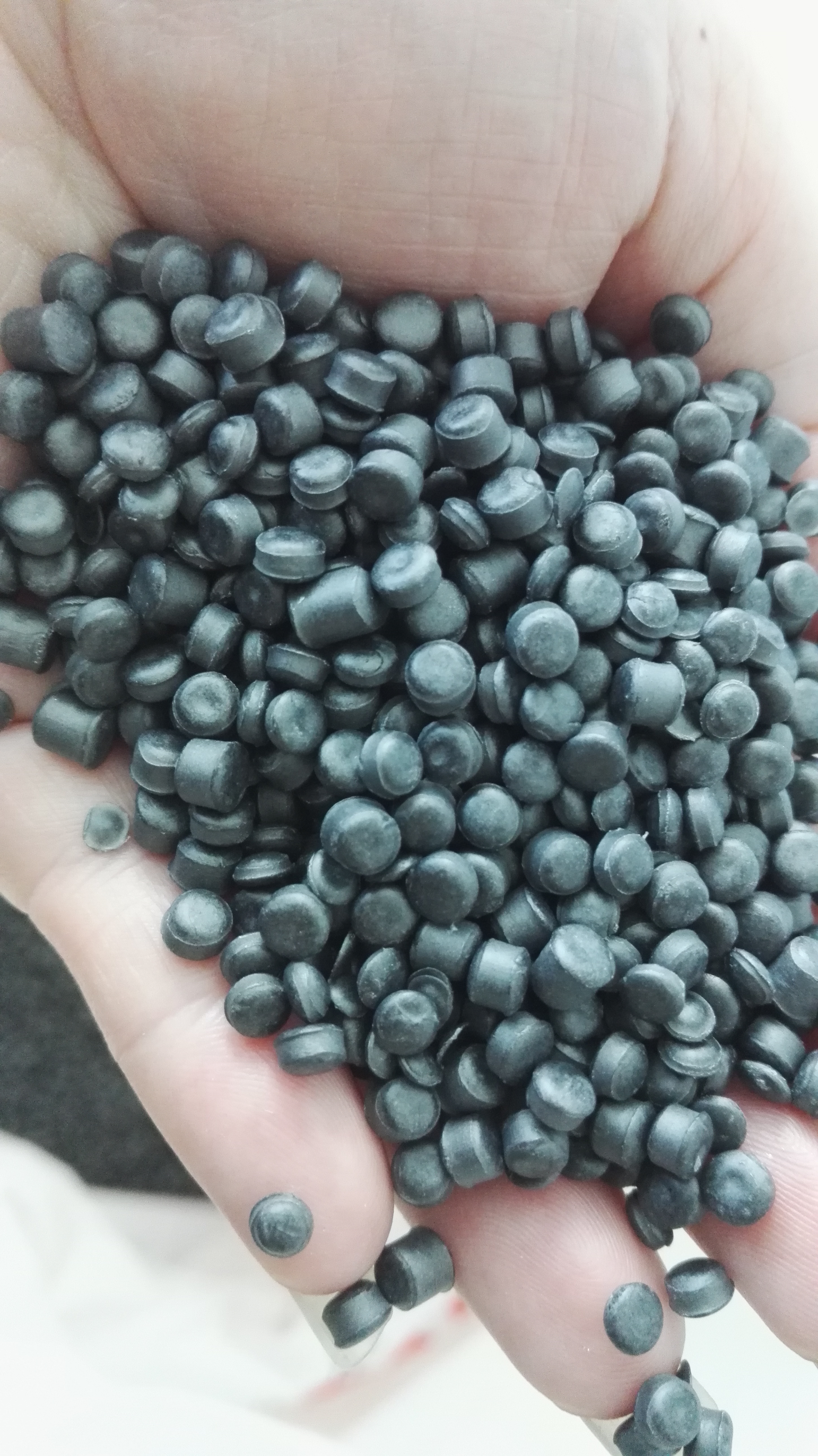
| Resin | FDA Subsection | Max Service Temp. | Key Properties | Typical Applications |
|---|---|---|---|---|
| PP (Polypropylene) | 21 CFR 177.1520 | 135°C (autoclave-safe) | Chemical resistant, BPA-free, microwave- and autoclave-safe, living hinge capable | Reusable containers, dispensing valves, autoclave trays, living-hinge caps |
| HDPE | 21 CFR 177.1520 | 60–70°C | Impact resistant, excellent moisture and chemical barrier, opaque, BPA-free | Industrial food storage bins, cutting boards, food processing equipment |
| PETG | 21 CFR 177.1630 (PET basis) | ~65°C | Crystal clear, rigid, BPA-free; sensitive to aggressive cleaners and solvents | Display packaging, fresh produce clamshells, cold-fill beverage dispensing parts |
| POM (Acetal / Delrin) | 21 CFR 177.2470 | ~90°C | Low friction, high stiffness, excellent dimensional stability; not for prolonged acidic food contact | Gears, valves, conveyor slats, dosing components in food processing equipment |
| Tritan (Eastman) | FDA-compliant grades available | −40°C to 109°C (select grades to 129°C) | Crystal-clear, BPA- and BPS-free, dishwasher- and microwave-safe, impact resistant | Premium water bottles, food storage containers, medical/food hybrid parts |
| Nylon PA6 / PA66 | 21 CFR 177.1500 | ~200°C (dry service) | High strength, heat-stable, absorbs moisture; requires food-contact-grade specification | High-temperature food equipment components, cooking utensils, conveyor guides |
Materials to avoid: PVC (Type 3) can release phthalate plasticizers and PVC stabilizers not permitted under 21 CFR; polystyrene (Type 6) can leach styrene monomer when heated. Polycarbonate (PC) is FDA-approved under specific conditions but carries BPA migration concerns and is increasingly restricted for direct, repeated food contact in new program designs. Always confirm with the specific food simulant and conditions of use before specifying any resin.
Mold Design and Production Requirements for Food-Contact Programs
Regulatory resin compliance is necessary but not sufficient. The mold design and production process introduce four additional requirements that buyers must verify before approving a food-contact injection molding program:
-
✓
Surface finish — SPI A1 or A2 required on all contact surfaces. Polished, non-porous surfaces (mirror to high-gloss) prevent bacterial adhesion and biofilm formation. Textured VDI 3400 finishes are acceptable only on non-food-contact zones. Suppliers should provide a surface finish certificate confirming contact-surface polish class before tool approval.
-
✓
No dead zones — geometry must be cleanable. Part design must eliminate enclosed pockets, crevices, and undercuts in food-contact zones that cannot be reached during cleaning. For food processing equipment, 3-A Sanitary Standards and EHEDG design guidelines specify minimum corner radii, surface finish, and drainage requirements.
-
✓
Mold-release agents — FDA-approved or release-free only. Conventional petroleum-based mold releases are not permitted for food-contact surfaces. The molder must either use 21 CFR 178.3910-listed release compounds or achieve release-free production through mold surface treatment and process optimization. This must be documented in the production work instruction.
-
✓
Material traceability — lot-level documentation required. Every production lot must link to a material certificate confirming the exact FDA/EU 10/2011-compliant grade, lot number, and any additives used. A generic material safety data sheet alone is insufficient to support an EU Declaration of Conformity. Buyers should confirm traceability procedures before first article approval.
EU PPWR 2026: The PCR Content Mandate That Changes Your Sourcing Timeline Now
The EU’s Packaging and Packaging Waste Regulation (PPWR) entered into force on 11 February 2025 and begins applying from 12 August 2026. It introduces mandatory minimum post-consumer recycled (PCR) content requirements for food-contact plastic packaging:
- PET packaging (non-beverage bottles): minimum 30% PCR by 2030, rising to 50% by 2040
- All other food-contact plastic packaging: minimum 10% PCR by 2030, rising to 25% by 2040
This is not a distant planning item — it is an active requirement for any food-contact packaging program targeting the EU market. OEM buyers developing these programs must confirm now that their injection molding partner can source certified food-contact PCR grades and provide the documentation chain required for PPWR compliance declarations.
Molding with PCR content introduces additional process challenges: PCR resins exhibit wider property variability than virgin grades, requiring tighter incoming material inspection, cavity pressure monitoring, and process capability tracking (Cpk ≥ 1.33 on critical dimensions). Suppliers operating under ISO 9001 or IATF 16949-certified quality systems are structurally better positioned to manage PCR variability and document the results required by PPWR compliance audits.
Ready to Qualify Your Food-Contact Injection Molding Supplier?
LongTeam’s ISO 9001-certified quality system and IATF 16949 process discipline — lot traceability, documented process parameters, and first-article inspection — provide the foundation food-contact programs require. Contact us to discuss your resin specifications, EU 10/2011 Declaration of Conformity documentation needs, and PPWR PCR content roadmap.
Contact LongTeam for Food-Grade Program ReviewWhat to confirm before supplier review
Use the drawing, material specification, expected demand, application conditions, and acceptance requirements to turn a general process discussion into a program-specific review.
- Which market and food-contact conditions apply?
- What grade-level declarations cover the resin and additives?
- Is migration or other testing required for the finished article?
- How are lots, substitutions, regrind, cleaning, and packaging controlled?
Standards and source context
Confirm the current revision and the customer-specific requirements that apply to the program.
Continue the engineering review
Use the related guides and capability pages to connect this topic to part geometry, tooling, molding, and qualification decisions.