What matters most
- Compare annual and peak demand, set ratios, service quantities, forecast uncertainty, and inventory policy.
- Review part volume, flow, gates, pressure, packing, cooling, resin, and appearance across cavities.
- Consider sorting, cavity identification, maintenance, downtime, scheduling, and replacement tooling.
Start with the part mix, not the cavity count
Evaluate the technical choice together with part requirements, tooling consequences, production controls, and the evidence required for approval.
Demand
Compare annual and peak demand, set ratios, service quantities, forecast uncertainty, and inventory policy.
Balance
Review part volume, flow, gates, pressure, packing, cooling, resin, and appearance across cavities.
Operations
Consider sorting, cavity identification, maintenance, downtime, scheduling, and replacement tooling.
Economics
Model tool investment, output, scrap, labor, inventory, maintenance, and change risk.
Technical guide
The sections below retain the detailed design, tooling, process, and quality context needed to evaluate this topic beyond the summary.
Key Takeaways
- 1 Multi-cavity molds (identical cavities) break even against single-cavity economics at approximately 28,500 parts — delivering 4× the annual output at just 2.3× the tooling cost for a typical 4-cavity configuration.
- 2 Family molds (different parts per shot) can reduce total tooling investment by 40–60% for multi-component assemblies — but require runner balance engineering, since a short-fill on one cavity scraps the entire shot.
- 3 Stack molds — a third architecture often overlooked — double output without increasing clamp tonnage, making them the optimal choice for thin-wall programs above 2 million units per year.
- 4 The correct cavity count is calculated from annual volume, cycle time, and machine availability — then validated against tooling break-even thresholds before the purchase order is issued.
The cavity architecture of a production mold — single-cavity, multi-cavity, family, or stack — is the most consequential tooling decision in any new injection molding program. It determines upfront tooling investment, per-unit production cost, machine press requirements, PPAP documentation workload, and production flexibility for the entire product life. Getting it wrong costs more than the tooling difference: mismatched capacity forces either over-investment in machines or under-delivery on volume commitments. This guide walks through the engineering logic and cost data for each architecture, with a decision framework calibrated to annual production volume and program complexity.
The Three Mold Architectures — Definitions and Trade-offs
A single-cavity mold produces one part per cycle. It carries the lowest tooling cost ($3,000–$15,000 for most commercial parts), the shortest qualification timeline, and the lowest PPAP documentation burden. It is the correct choice for programs under 10,000 units per year, for parts with extreme geometry complexity, and for market-entry launches where volume projections are uncertain. At higher volumes, single-cavity economics are uncompetitive: the machine runs the same cycle time whether it produces one part or four per shot.
A multi-cavity mold contains two or more identical cavities filled simultaneously in every shot, producing 2, 4, 8, 16, or more geometrically identical parts per cycle. Per-part machine-time cost falls in direct proportion to cavity count. The tooling cost premium is sublinear: a 4-cavity tool does not cost 4× a single-cavity tool, because many costs — mold base, hot runner manifold, design engineering — are shared across all cavities. According to Ulite Mech’s 2025 cavity cost analysis, each additional cavity costs 15–30% less than the previous one due to shared design and frame costs. This structure makes multi-cavity tooling the default architecture for any program above 25,000 annual units of a single part.
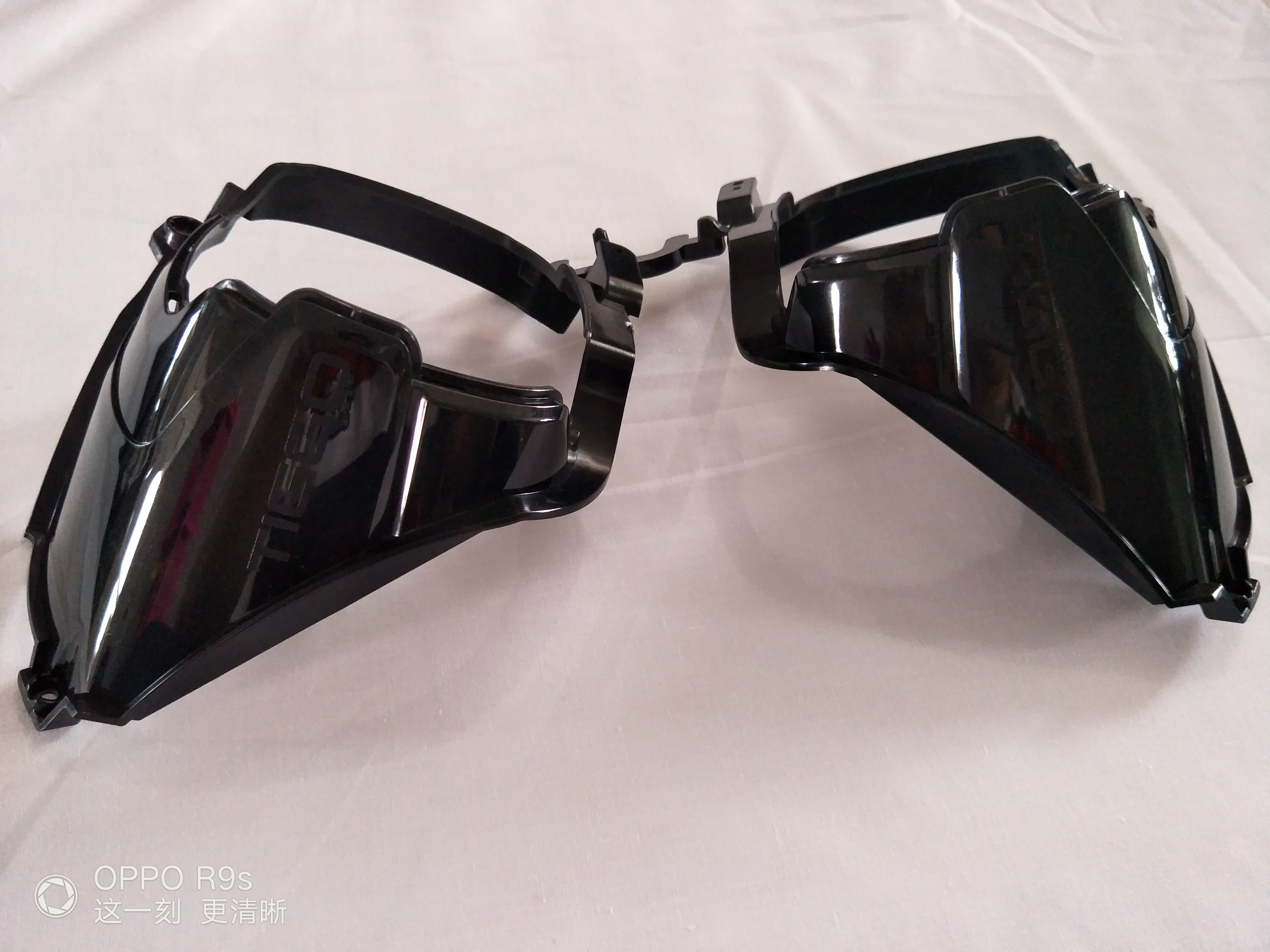
A family mold contains two or more cavities producing different parts per shot. For a product assembly with multiple housing components, a family mold produces all components simultaneously — eliminating separate tooling programs per component. The economic benefit is clear: total tooling investment for a multi-SKU assembly falls by 40–60% compared to dedicated molds for each component. The engineering risk is runner balance: non-identical cavities fill at different rates, and without active compensation the smaller cavity flashes while the larger short-shoots. This risk is manageable with proper engineering but must be designed in from the outset, not corrected after T0.
A stack mold is a specialized architecture where two or more sets of identical cavities are stacked back-to-back on a rotating center section, doubling the cavity count without increasing the projected area of the tool — and therefore without requiring a larger press. Stack molds are used for thin-wall packaging closures and high-volume consumer goods at annual rates above 2 million parts. Tooling investment is substantial ($80,000–$200,000+), but the per-unit economics at 5+ million annual shots are unmatched by any standard architecture running equivalent machine tonnage.
Multi-Cavity Mold Costs and Break-Even Analysis
Selecting the correct cavity count begins with a cost-scaling table, then a break-even calculation against single-cavity economics. The data below is drawn from Ulite Mech’s 2025 cavity cost benchmark using a representative complex housing part, reflecting tooling cost, annual machine capacity at 24/7 operation, and break-even volume versus single-cavity tooling:
| Cavity Count | Tooling Cost (USD) | Annual Capacity (24/7) | Break-Even vs 1-Cavity | Typical Volume Range |
|---|---|---|---|---|
| 1 cavity | $8,500 | ~300,000 parts/yr | — | <5,000 units/yr |
| 4 cavities | $19,800 | ~1,080,000 parts/yr | ~28,500 parts | 25,000–100,000 units/yr |
| 8 cavities | $28,500 | ~1,920,000 parts/yr | ~42,800 parts | 100,000–500,000 units/yr |
| 16 cavities | $42,000 | ~3,360,000 parts/yr | ~68,200 parts | >500,000 units/yr |
Two observations from this data deserve emphasis. First, the incremental cost per additional cavity falls sharply: going from 1 to 4 cavities adds $11,300 to tooling cost but delivers 3.6× additional annual output capacity — a highly favorable return for programs above the 28,500-part break-even threshold. Second, 8- and 16-cavity tools require larger injection machines (clamp tonnage scales with projected area), longer PPAP qualification cycles, and dedicated inter-cavity weight monitoring to hold variation below 0.5%. For programs in the 100,000–500,000 annual range, the 8-cavity configuration typically produces the best total-cost outcome when machine availability, qualification workload, and piece-part savings are all included alongside the tooling price comparison.
Family Mold Engineering: Where It Works — and Where It Fails
A family mold is the correct choice when two conditions are simultaneously true: (1) the program involves multiple related components consumed in a fixed ratio — for example, a two-piece enclosure where top and bottom shells are always assembled 1:1 — and (2) individual component volumes do not justify dedicated multi-cavity tooling. When both conditions hold, a family mold eliminates one set of tooling costs, one qualification program, and one mold maintenance schedule for the product’s service life.
The critical engineering constraint is runner balance. In a multi-cavity tool with identical cavities, symmetric runner geometry ensures equal fill automatically. In a family mold, cavities of differing volume, wall thickness, and projected area fill at different rates through symmetric runners. The smaller cavity fills and packs first; continued injection pressure causes flash on the already-filled cavity while the larger cavity has unfilled sections — or injection stops early with a short shot in the larger cavity. Either defect scraps the entire shot, including parts from the correctly filled cavity. Three engineering approaches address this:
- Unbalanced runner design — Deliberately restrict flow to the smaller cavity by increasing runner length or reducing runner diameter, slowing fill to match the larger cavity. Effective for volume ratios below 3:1; requires Moldflow simulation validation before steel is cut.
- Sequential injection via process control — Fill the larger cavity first using a timed injection profile, then open a secondary gate to the smaller cavity. Adds process complexity and reduces the cycle time advantage of family molding.
- Valve-gate hot runner system — Individual electronic valve gates provide independent injection timing per cavity, eliminating fill-sequence conflicts entirely. Adds $8,000–$20,000 to tooling cost but delivers consistent quality and eliminates cold runner waste. Required when cavity volume ratios exceed 3:1 or when Class A surface finish is specified on all components.
Family molds also become a production liability when engineering changes alter the consumption ratio of components. If a product revision shifts a 1:1 assembly ratio to 2:1, the family mold generates excess inventory of one component per shift or requires deliberate underutilization to avoid imbalance. Dedicated multi-cavity tooling carries no such constraint and should be specified whenever volume projections for individual components are independent or subject to revision.
Cavity Architecture Decision Framework
The following table maps the primary program variables to the recommended tooling architecture. Annual volume is the dominant driver; parts per program and PPAP requirements are secondary constraints that can shift the recommendation in borderline cases:
| Annual Volume | Parts per Program | Recommended Architecture | Key Engineering Requirement |
|---|---|---|---|
| <5,000 units/yr | Any | Single-cavity | Lowest tooling cost; adequate capacity |
| 5,000–25,000 units/yr | 1 part type | 2-cavity multi-cavity | Symmetric H-pattern runner; break-even ~15,000 parts |
| 5,000–25,000 units/yr | 2–4 related parts, fixed ratio | Family mold | Moldflow runner balance validation required before T0 |
| 25,000–100,000 units/yr | 1 part type | 4-cavity multi-cavity | Break-even ~28,500 parts; cavity-level PPAP reports required |
| 100,000–500,000 units/yr | 1 part type | 8-cavity multi-cavity | Larger press required; valve-gate hot runner recommended |
| >500,000 units/yr | 1 part type (thin-wall) | 16+ cavity or stack mold | Stack mold doubles output at same press clamp tonnage |
One constraint not captured in the table above is PPAP documentation burden for automotive programs. A Level 3 submission under the AIAG PPAP 4th Edition standard requires cavity-identified dimensional layout reports and individual Cpk/Ppk calculations per cavity; an 8-cavity automotive tool generates 8× the first-article dimensional data of a single-cavity mold. For IATF 16949-certified molders with digital quality management systems, this is standard procedure integrated into the qualification workflow. For suppliers building PPAP documentation manually per program, high-cavity-count tools create a documentation risk that delays Part Submission Warrant approval and extends launch timelines — a cost that does not appear on the tooling price comparison but is real in program scheduling.
Need a Cavity Strategy for Your Next Mold Program?
LongTeam sizes cavity count as part of every mold quotation — matching architecture to your annual volume target, press capacity, and PPAP documentation requirements before any tooling commitment. Multi-cavity and family mold programs are part of our standard portfolio, validated by Moldflow runner balance analysis at the quotation stage. Contact us to discuss your program.
Contact Our Mold Engineering Team →What to confirm before supplier review
Use the drawing, material specification, expected demand, application conditions, and acceptance requirements to turn a general process discussion into a program-specific review.
- Are the parts consumed in the same ratio?
- Can different cavities fill, pack, and cool within one stable process?
- What happens when one cavity or component changes?
- Which layout produces the best risk-adjusted program cost?
Continue the engineering review
Use the related guides and capability pages to connect this topic to part geometry, tooling, molding, and qualification decisions.